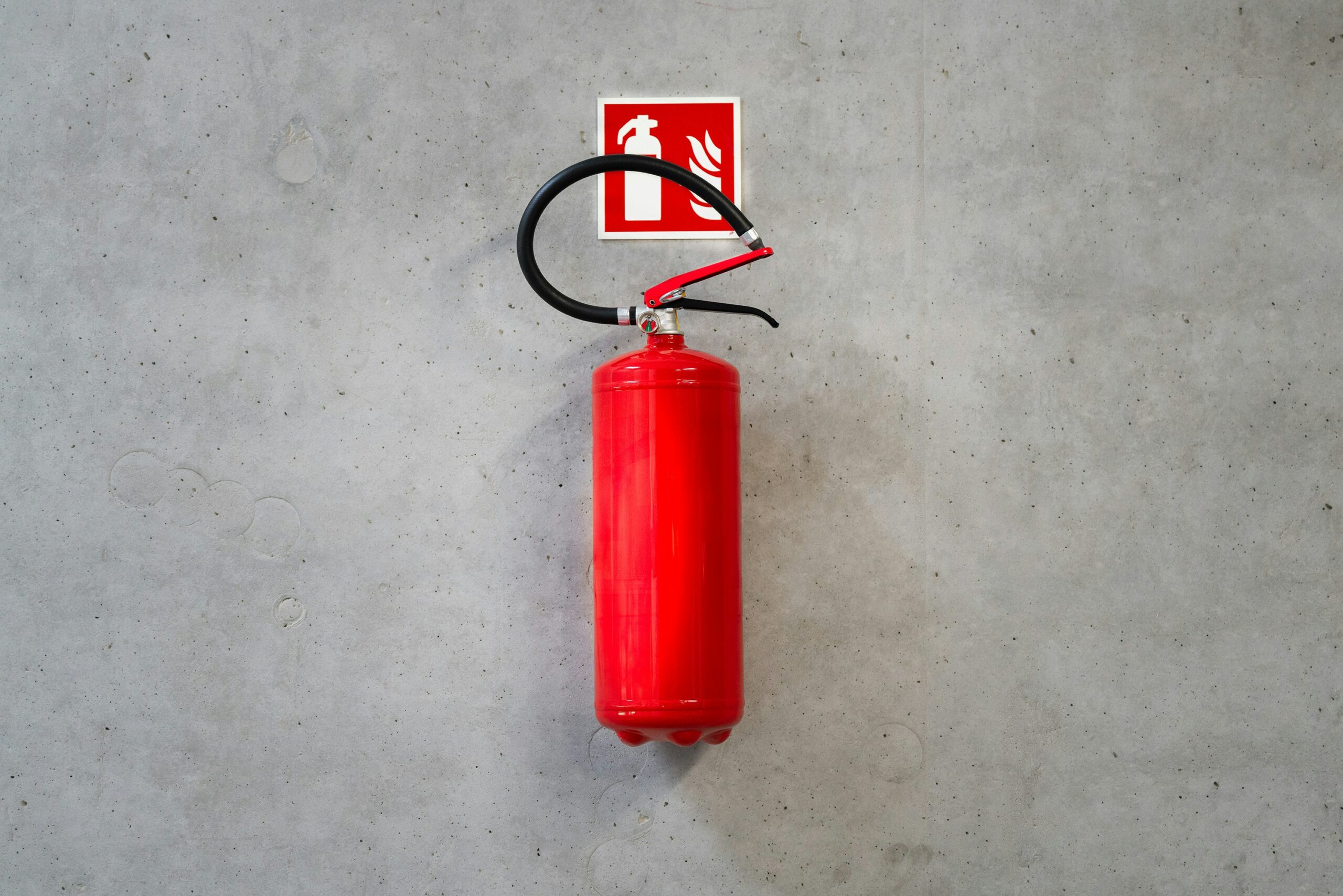
You’ve got a fire risk assessment on file – probably even a designated fire marshal or two – but if the fire alarm went off right now, would every single person in your building know what to do?
That’s the real test of fire safety training for employees UK-wide, and it’s not the same as simply ticking a compliance box. A genuinely fire safety-aware workforce behaves differently day to day, not just during the annual drill.
Here’s what this looks like in practice: the legal basics, what staff at every level should know, and the gaps most employers don’t realise they have.
The legal basics, in plain English
Under the Regulatory Reform (Fire Safety) Order 2005, every workplace must have a ‘responsible person’ with legal duties. In many cases, it’s the employer. That means carrying out a fire risk assessment, keeping it up to date, and making sure staff know what to do if there’s a fire.
It’s not a one-off exercise – it’s an ongoing responsibility – and enforcement is active. From 2024-25, fire and rescue services issued 2,972 formal fire safety notices in England, up 5.3% on the year before. Audits aren’t getting any softer, either: only 58% of fire safety audits carried out that year were rated satisfactory, the lowest proportion in over a decade.
What every employee should know, regardless of their role
You don’t need every employee to be a fire warden. But there’s a baseline every single person on your payroll should be able to answer without hesitation:
- What to do if they discover a fire – raise the alarm first; don’t try to be a hero.
- Their nearest two evacuation routes, not just the one they usually use.
- Where the assembly point is, and that they need to actually go there.
- Who to report to once outside, so head counts are accurate.
- What not to do – don’t use the lifts, no going back for belongings, and don’t ever prop open fire doors.
That last point matters more than people think. Fire doors get wedged open constantly, usually for convenience, not malice. A fire safety-aware workforce understands why that’s a problem rather than just being told it’s a rule.
💡 Want to make sure your team is fully covered on fire safety? Our Basic Fire Safety Awareness Certification gives every employee a clear, CPD-certified grounding in fire prevention and emergency response – and you can try it free for 14 days.
The gaps employers consistently miss
Most organisations have the obvious stuff covered. It’s the less obvious gaps that catch businesses out at audit time, or worse, during a real fire.
New starters often miss the induction window. If fire safety training happens once a quarter in a group session, anyone who joins in the interim gets left exposed for weeks. That’s a genuine liability gap, not just an admin oversight.
Refresher training gets forgotten. People forget evacuation routes faster than you’d expect, especially if the office layout has changed since their last session. Fire safety induction training for staff should be a recurring event, not a one-and-done.
Hybrid and remote staff get overlooked. If someone’s only in the office two days a week, they’re less likely to know the current procedures than someone who’s there full time. They still need the same baseline knowledge.
Contractors and agency staff fall through the net. They’re on your premises, so they should be included in your fire safety arrangements. Treating them as someone else’s problem is exactly the kind of gap an auditor will spot.
A telling statistic here: Article 21 of the Fire Safety Order, which covers training specifically, was cited in 4,275 breaches during fire safety audits in 2024/25.. Training gaps aren’t rare – they’re one of the most common reasons businesses fall foul of inspections.
Why a documented training record matters
If an inspector – or, worse, an insurer – ever asks what training your staff have actually had, a vague answer isn’t good enough. You need evidence.
This is where online workplace fire safety awareness training earns its keep. CPD-certified courses completed through your LMS create an automatic, timestamped record of who’s been trained, when, and on what. That’s something you can point to immediately, rather than scrambling to reconstruct a training history from memory or spreadsheets.
It also means consistency. Every employee gets the same standard of fire safety compliance training online, regardless of which manager delivered their induction or how busy that week was.
What this looks like once it’s working
A fire safety-aware workforce isn’t one that’s memorised a leaflet. It’s one where:
- Staff notice and report blocked fire exits without being prompted.
- New starters get trained in their first week (not their first quarter).
- Refresher training happens on a schedule, automatically.
- Everyone, including contractors, knows the evacuation routine.
- You can produce a complete training record in minutes, not days.
None of this needs to be complicated. It just needs to be consistent – and documented.
If you had to prove your fire safety training was up to date tomorrow, how long would it take you to pull the records together? That’s usually the question that reveals whether a workforce is genuinely fire safety-aware, or just hoping nothing goes wrong.
Ready to train your team?
Staff Skills academy+ gives your team access to 750+ CPD-certified courses – including Basic Fire Safety Awareness Certification. Start a free 14-day trial today, or speak to our team about what works for your organisation.
Found this useful? Get practical guidance like this sent straight to your inbox, every month. Sign up here.