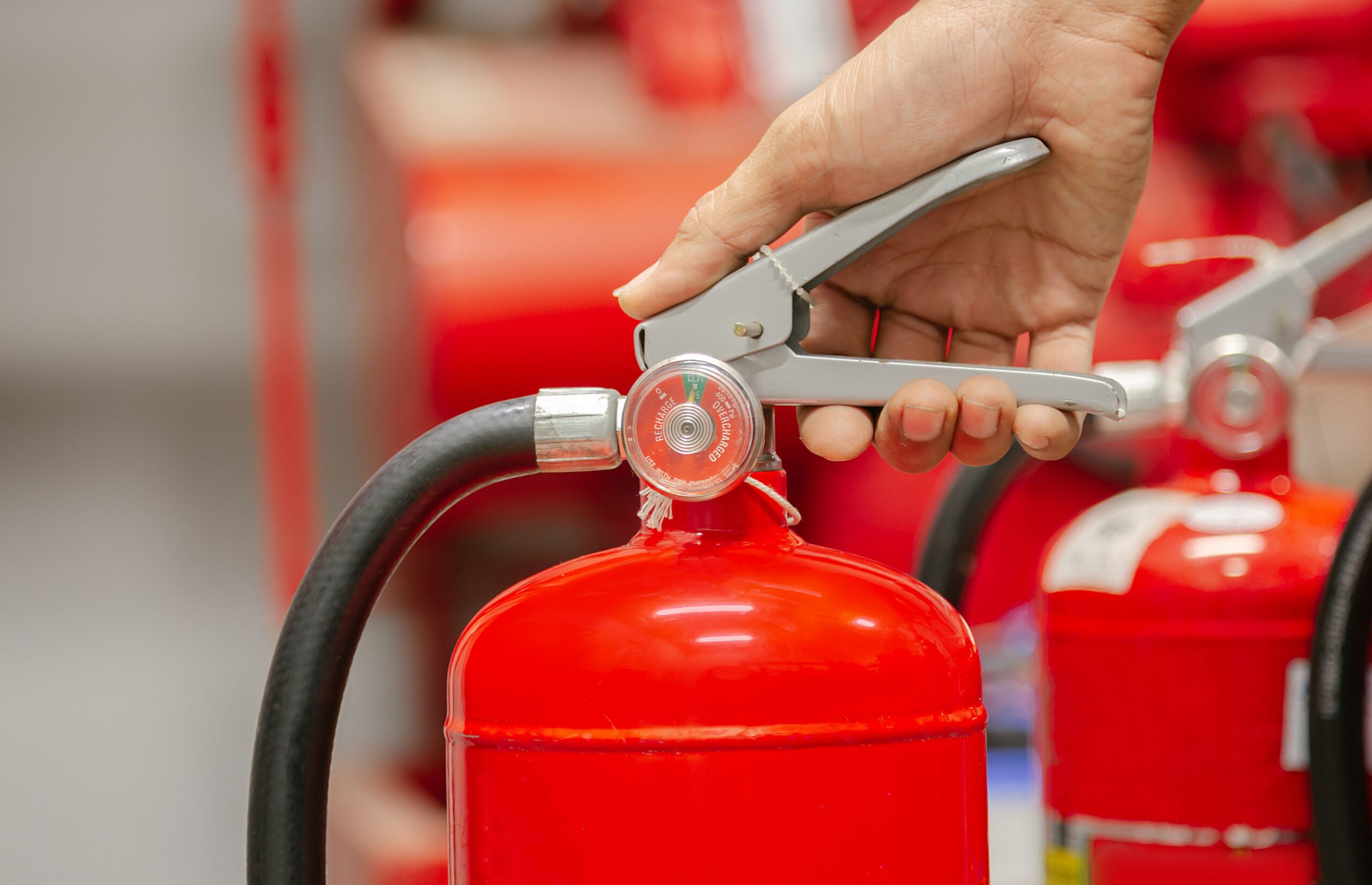
Most workplaces have them. They hang on the wall near the fire exit, get checked once a year, and are otherwise ignored.
But knowing where to find the fire extinguisher isn’t enough. When smoke starts filling a room, does anyone know how to use it?
This guide covers the different types of fire extinguisher and when to use each one. It also looks at why fire extinguisher training for staff matters far more than most UK workplaces assume.
Knowing it’s there isn’t the same as knowing how to use it
Most staff can locate the extinguisher, but far fewer could tell you which type it is, or why it matters.
That gap has real consequences. In the year ending March 2026, fire and rescue services in England attended 13,679 fires in buildings other than homes – offices, shops, warehouses and more. That’s over 1,000 fires a month.
Using the wrong extinguisher on the wrong fire doesn’t just fail to help, it can make things considerably worse. Using water on live electrical equipment can create an electric shock risk, while foam extinguishers aren’t suitable for deep-fat fryers or chip pan fires.
This isn’t a niche concern for high-risk industries. Offices, shops, warehouses and care settings all feature on the same incident data. That’s exactly why fire safety training needs to reflect the risks and equipment in your particular workplace.
The types of fire extinguisher, and what each one is for
UK workplaces may have several extinguisher types, depending on the risks identified in the fire risk assessment. Modern extinguishers have a red body with a colour-coded label showing the extinguisher type:
- Water extinguishers (red label): for Class A fires involving solid materials such as paper, wood and textiles. They aren’t suitable for live electrical equipment.
- Foam extinguishers (cream label): for Class A and B fires, including flammable liquids such as petrol and diesel. They aren’t suitable for deep-fat fryers or chip pan fires.
- CO2 extinguishers (black label): commonly used for fires involving electrical equipment and can also be used on flammable-liquid fires.
- Dry powder extinguishers (blue label): suitable for several classes of fire, including fires involving electrical equipment, but generally unsuitable for enclosed spaces because they can reduce visibility and affect breathing.
- Wet chemical extinguishers (yellow label): designed for Class F fires involving cooking oils and fats.
Staff who’ve never been shown the difference will reach for whatever’s nearest. That’s a gamble your business shouldn’t be taking.
When to use an extinguisher, and when to leave it alone
Fire extinguishers are there to tackle a fire in its early stages, but that doesn’t mean every employee should try to fight one. Your fire risk assessment and emergency procedures should make clear who is expected to use firefighting equipment, and anyone expected to do so should have suitable training.
Even then, an extinguisher should only be considered if:
- The fire is small and contained. If it’s already spreading, get out.
- There’s a clear escape route behind you. Never let the fire come between you and your way out.
- The alarm has already been raised. Tackling a fire should never delay either evacuation or calling the fire and rescue service.
- You know which extinguisher to use and how to use it safely. Never guess under pressure. If any of that isn’t the case, the right call is to leave and let the professionals handle it.
If there’s any doubt, leave the premises and call the fire and rescue service.
This is often the hardest part to teach. People naturally want to help, and a fire extinguisher can feel like the obvious tool for the job. Good training doesn’t just cover technique, it gives staff the confidence to walk away when that’s the safer option.
💡 Want to make sure your team is fully covered on fire extinguisher training? Our Understanding Fire Extinguishers Certification gives staff the confidence to identify the right extinguisher and use it safely, and you can try it free for 14 days.
Why the annual fire drill isn’t enough
Fire drills teach people how to leave a building. They don’t teach anyone how to use the equipment correctly.
This distinction matters more than most businesses realise. In the year ending March 2026, fire and rescue authorities carried out 50,195 fire safety audits across England, and just 60% had a satisfactory outcome.
Under the Regulatory Reform (Fire Safety) Order 2005, employers have a legal duty to make sure staff get adequate fire safety training. A yearly walk to the car park doesn’t meet that requirement on its own. Training should cover the fire safety measures in your workplace and the actions employees need to take, with suitable training provided to anyone expected to use firefighting equipment.
Build targeted training into your fire safety plan
A stronger approach doesn’t need to be complicated. It just needs to go beyond the drill:
- Make responsibilities clear. Your fire risk assessment and emergency plan should identify who has specific fire safety responsibilities, including any fire wardens or other employees expected to use firefighting equipment.
- Refresh training regularly. Fire safety knowledge fades. Build in refreshers rather than a one-off session.
- Use equipment checks as an extra reminder. When extinguishers are checked or serviced, use it as another opportunity to remind staff what equipment’s available and who’s expected to use it.
- Keep clear records. Up-to-date training records help demonstrate that you’ve provided appropriate fire safety training if a fire and rescue service inspects your premises.
None of this needs to be time-consuming. It needs to be deliberate.
It’s worth thinking about new starters too. Fire safety training should form part of the induction process, rather than waiting for the next scheduled refresher. That means covering more than where the exits are. Staff need to understand the fire procedures, the equipment provided and what they’re expected to do if a fire starts. Building extinguisher awareness into onboarding, rather than saving it for the next annual review, closes that gap before it becomes a problem.
A quick question worth asking
If a fire started in your workplace tomorrow, would your team know what to do? Would they know which extinguisher is suitable, whether they’re expected to use it and, most importantly, when to leave?
If you’re not certain, that’s worth fixing sooner rather than later.
Ready to train your team?
Staff Skills academy+ gives your team access to 750+ CPD-certified courses – including Understanding Fire Extinguishers Certification. Start a free 14-day trial today, or speak to our team about what works for your organisation.
Start your free trial | Request a quote
Found this useful? Get practical guidance like this sent straight to your inbox, every month. Sign up here.